
Vehicle Care Seasons
How to Protect Your Car from Road Salt
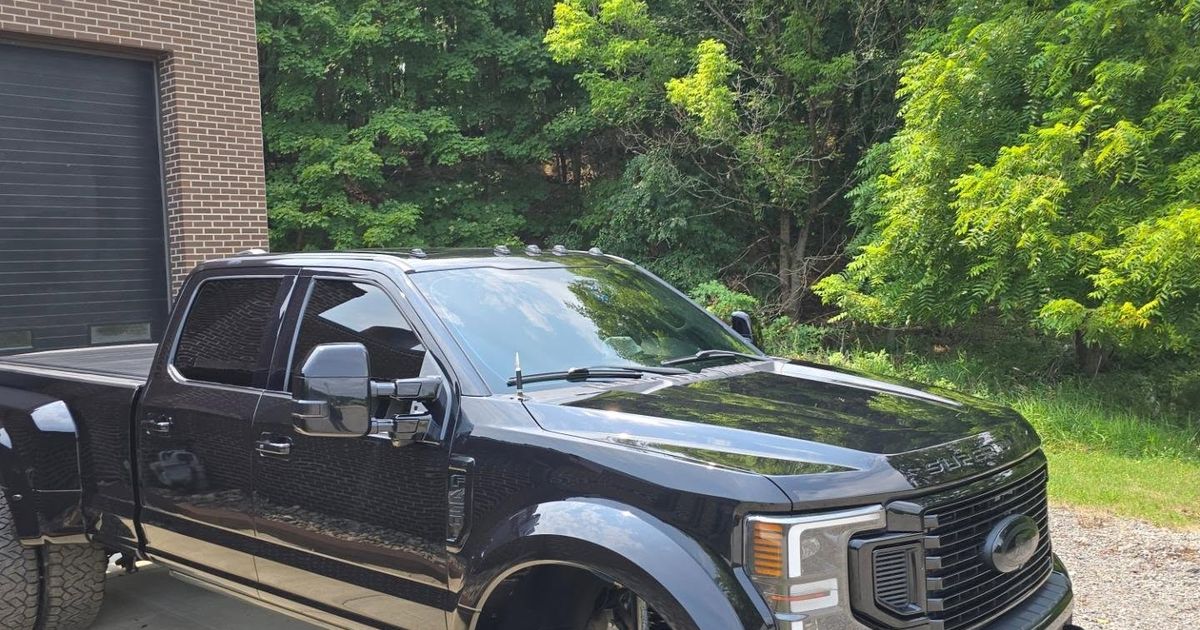
To protect your car from road salt, do three things: start the salt season with a clean, decontaminated car, put a sealant or ceramic coating on the paint so salt film cannot sit against bare clear coat, and wash the car, underbody included, every few weeks all winter instead of waiting for spring. Salt causes damage through prolonged contact, so every layer of this system exists either to block that contact or to shorten it.
In Western Pennsylvania this is not optional maintenance. Between PennDOT brine trucks pre-treating Route 19 and I-79 before every storm and a freeze-thaw cycle that reactivates the salt dozens of times a season, an unprotected car here simply rusts on a faster clock than the same car in a dry state. Here is the system, ordered by impact.
Know the enemy: brine is worse than rock salt
Old-fashioned rock salt bounced, scattered, and washed away. Modern road treatment is liquid brine, often salt blended with additives, sprayed in the stripes you see on dry pavement before a storm. It is engineered to stick to the road, which means it also sticks to your undercarriage as an even, moisture-attracting film. Worse, salts like these stay chemically active in humidity, corroding quietly between storms, and they creep into seams, spot welds, brake line fittings, and stone chips where nobody looks.
That is why protection has to start underneath, where the film accumulates and never gets sunlight or rinse water.
Step 1: Start the season clean
The first move is simple: go into winter with nothing already eating at the car. Two rules govern it:
- Do it in the fall window. October and November, before roads are treated, so you are not starting the season with last year’s residue still in the seams.
- Get the underside and wheel wells truly clean. Flood the undercarriage, wheel wells, and lower panels, and look for chips or bare spots on the lower body while you are down there. An Exterior Detail handles the topside decontamination at the same time.
If you keep vehicles long-term, a clean start plus the wash rhythm below is the cheapest protection in this entire guide.
Step 2: Seal the paint and glass
Topside, salt film dries onto paint and holds moisture against it, dulling the finish and accelerating oxidation, especially on lower panels that catch spray. Protected paint sheds that film instead of hosting it:
- Minimum: a machine-applied paint sealant going into winter, on decontaminated paint.
- Better: a ceramic coating, whose cured surface resists salt chemically and rinses clean with dramatically less effort. Winter is the season that justifies the price.
- Glass too. A rain-repellent glass treatment keeps salty spray beading off the windshield, which on a slushy January night on 79 is a visibility upgrade you feel immediately.
Step 3: Wash on a schedule, underbody first
Protection buys time; washing resets the clock. The rhythm that works: a wash after every storm-and-thaw cycle, or every two to three weeks minimum, with real attention below the beltline.
- Flood the undercarriage and wheel wells. At a self-serve bay, half your quarters belong under the car. Touchless washes with underbody spray count too.
- Pick above-freezing days so seals, locks, and seams can dry, and wipe door jambs after.
- Do not park a salt-crusted car in a heated garage for weeks. Warmth plus moisture plus salt is the exact recipe for corrosion; rinse first, then enjoy the garage.
- Skip brush tunnels. Winter grit in shared brushes trades a salt problem for a swirl problem.
The full seasonal routine, including interior salt defense and fall prep timing, is in our complete winter car care guide.
Step 4: Spring exit protocol
When salt season ends, strip the residue properly: a thorough decontamination wash, door jambs and seams included, plus carpet extraction for the salt tracked inside on boots. A spring detail from our full menu is the natural bookend, and it is also when we can look the underbody over and tell you how the winter actually went down there.
What road salt protection costs vs what rust costs
Some honest math: a sealant or coating is a one-time cost each season or each few years, and a winter of self-serve underbody washes is cheap. Against that, price a rusted subframe, seized fasteners on every future repair, or the trade-in hit for rot bubbling through a rocker panel. Salt protection is one of the rare car expenses with an obvious return.
Get ahead of the trucks
The brine stripes show up on Route 19 earlier every year. If your car is going into this winter unprotected, book a visit and we will build the right combination of paint protection and a wash plan for how and where you actually drive. Beating the first storm by even a week counts.