
Paint Protection
Can Scratches Be Buffed Out of Car Paint?
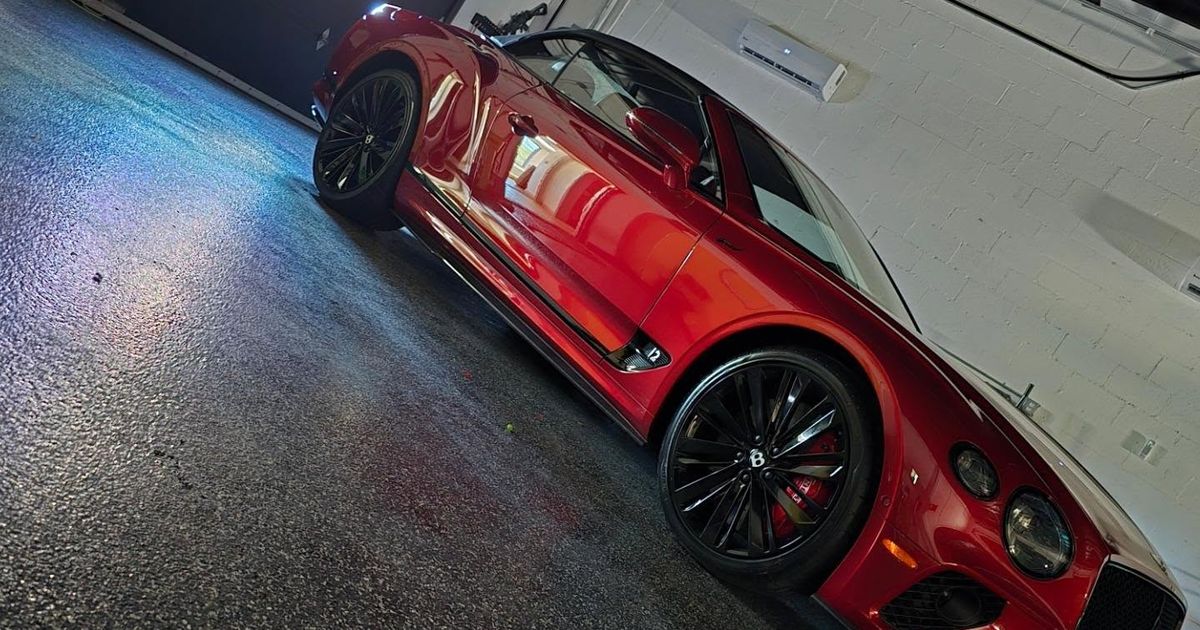
Yes, most scratches can be buffed out, as long as they are in the clear coat and not through it. Swirl marks, light scratches from washing, and fine marks from bushes or fingernails around door handles usually polish out completely, while scratches that reach the color or primer can only be made less obvious.
If you are searching for someone to buff out scratches on your car near Wexford, that is exactly what paint correction is: machine polishing that levels the clear coat until the scratch edges disappear. This post explains how to tell which scratches will come out, what buffing actually does, and what it costs at our shop on US 19.
What “buffing out” a scratch really means
Car paint is built in layers. On top is a clear coat that gives the gloss and protects everything underneath. Below it is the base coat, which holds the color, then primer, then the metal or plastic panel.
Most of the scratches you see are only in that clear top layer. You notice them because the scratch has sharp edges that catch light differently from the flat paint around it. Buffing, which detailers call polishing or paint correction, uses a machine polisher, a pad, and an abrasive compound or polish to remove a very small amount of clear coat around the scratch. Once the surface is level again, light reflects evenly and the scratch is gone.
That is the key point: buffing does not fill a scratch. It removes the paint around it until the bottom of the scratch and the surrounding surface match. That only works when there is enough clear coat to do it safely.
Products that claim to “erase” scratches in a wipe usually contain fillers or glazes. They can hide fine marks for a few washes, then the scratches come back. We cover the difference in more detail in our post on whether auto detailing can remove scratches.
The fingernail test
The quickest way to judge a scratch at home is the fingernail test. Clean the area first so you are not grinding dirt into it, then:
- Run your fingernail slowly across the scratch, not along it.
- If your nail glides over without catching, the scratch is almost certainly in the clear coat.
- If your nail catches slightly, it may be at the bottom of the clear coat or into the base coat.
- If your nail catches clearly, or you can see white, gray, or bare metal, the scratch is through the paint layers.
Color is another clue. A scratch that looks lighter than the paint, or whitish, is usually in the clear. A scratch that shows a different color, like gray primer under red paint, has gone past the clear coat.
The test is a rough guide, not a guarantee. Scratches are best judged in person under strong light, because some marks that seem shallow are deeper than they look, and some that catch a nail polish out better than expected.
Scratches that usually buff out completely
These are the marks paint correction handles well:
- Swirl marks. The fine circular webbing you see in sunlight, almost always from washing and drying with dirty mitts, brushes, or towels. Our post on what causes swirl marks covers where they come from.
- Light wash scratches. Straight, fine lines from wiping a dusty car or using an automatic wash.
- Fingernail marks around door handles. Common on darker paint and usually shallow.
- Light brush and branch marks. Faint scrapes from parking near hedges or driving narrow roads.
- Haze, water spot etching, and dull paint. Not scratches exactly, but the same polishing process restores the gloss.
On paint like this, a single polishing stage often removes most or all of the defects.
Scratches that will not buff out fully
Some damage is too deep for polishing alone:
- Scratches through the clear coat into the color, where your nail catches hard.
- Scratches showing primer or metal. The paint is gone in that spot. Buffing cannot put it back.
- Key scratches, which are usually deep and long.
- Rock chips, which are small craters where paint has broken away, not scratches.
- Clear coat failure, where the clear is peeling or flaking. Polishing will make this worse.
What buffing can do on deeper scratches is round off the sharp edges so the scratch catches less light and looks softer. That can be a big improvement, but it will not make the mark vanish. Deep scratches need touch up paint or a body shop. Our guide on how to fix scratches on a car walks through those options.
Can you buff out scratches yourself?
You can, carefully. A dual action polisher, a polishing pad, and a light polish are the safest starting point for a home attempt on fine scratches and swirls. A few rules keep you out of trouble:
- Wash and clay the area first. Polishing over dirt adds new scratches.
- Start with the least aggressive pad and polish, and test a small section.
- Keep the polisher flat and moving. Stay off sharp body lines and edges, where the clear coat is thinnest.
- Wipe and check your work under good light often.
- Do not keep going back to the same spot to chase a deep scratch. That is how clear coat gets burned through.
Hand rubbing compounds can soften very light marks on a small area, but they will not do much for a whole car full of swirls. If the scratch is deep, or the car has never been polished and you are unsure how much clear coat is left, a shop is the safer choice.
What paint correction costs at our shop
Buffing scratches out of the whole car is priced as paint correction. Our current prices:
- One Step Paint Correction: starting at $285 for a sedan, $305 for an SUV, and $335 for a truck or van. Removes swirl marks and light scratches and restores deep gloss.
- Two Step Paint Correction: starting at $605 for a sedan, $675 for an SUV, and $755 for a truck or van. Multi stage correction for heavier oxidation and defects.
- Three Step Paint Correction: starting at $1,095 for a sedan, $1,250 for an SUV, $1,500 for a truck or van, and $1,750 for oversize vehicles. Our most thorough correction for the deepest defects.
If you also want the inside cleaned, the Showroom Premium Detail combines our Signature Full Detail with single stage paint correction and sealant, starting at $520 for a sedan. Final price always depends on size and the condition of the paint.
Protect the paint after it is corrected
Once scratches are polished out, the paint is at its best, and that is the time to protect it. A ceramic coating adds a hard, slick layer that makes washing easier and helps resist light marring. Our 3 year coating starts at $520 with prep included, and our 5 year coating starts at $680 and includes single stage correction. A 6 month paint sealant ($500) or a carnauba hand wax ($70) are lighter options.
Protection is only half of it. The same habits that caused the swirls will bring them back, so switch to clean microfiber mitts and towels, use the two bucket method, and skip brush car washes when you can.
Get your scratches looked at in Wexford
If you are in Wexford, Pine, McCandless, Cranberry Township, or anywhere in the North Hills, bring the car to our shop at 13065 US-19 and have the scratches looked at in person. All work is done at the shop, Monday to Friday, 9am to 5pm. Book your paint correction online or call (412) 754-5772.
Frequently asked questions
Can scratches be buffed out of a car?
Yes, if the scratch is in the clear coat. Light scratches, swirl marks, and haze can be leveled out by machine polishing. Scratches that reach the color coat or bare metal can be made less visible, but they cannot be fully removed by buffing.
How do I know if a scratch can be buffed out?
Run a fingernail lightly across it. If your nail does not catch, the scratch is usually in the clear coat and can likely be polished out. If your nail catches, or you see white, gray primer, or metal, it is deeper than polishing can safely fix.
How much does it cost to buff out scratches?
At our Wexford shop, One Step Paint Correction starts at $285 for a sedan, $305 for an SUV, and $335 for a truck or van. Heavier defects may need Two Step Paint Correction, which starts at $605 for a sedan. Final price depends on size and condition.
Does buffing a car damage the paint?
Every polish removes a very thin layer of clear coat, which is why it should be done carefully and not over and over. A shop that measures the work and uses the least aggressive step that does the job keeps the clear coat healthy.