Paint Protection
Clear Bras for Cars: What They Are and How They Work
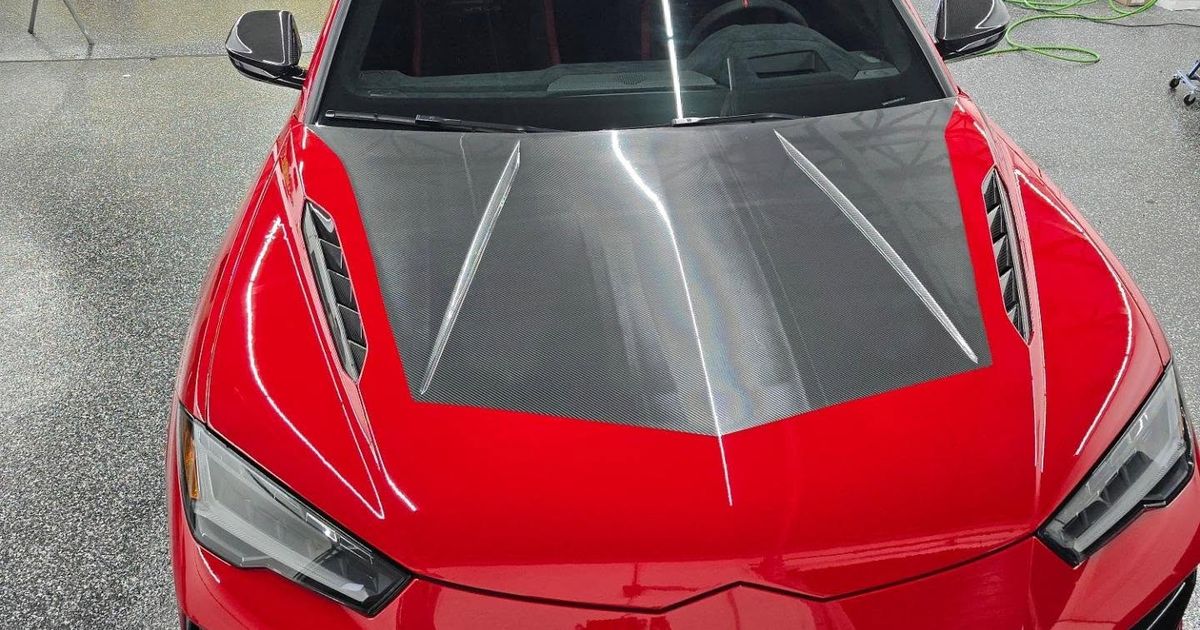
Clear bras for cars are sheets of clear, flexible urethane film applied over the paint to absorb rock chips, sand, and road debris before they reach the clear coat. They are the same thing as paint protection film, or PPF, and on the front of a car they are the most effective physical barrier you can put between your paint and the highway.
If you drive I-79, the Parkway, or Route 19 through Wexford and the North Hills every day, the front of your car takes a beating. Here is how a clear bra works, what it does and does not do, and how to decide how much of the car to cover.
Where the name “clear bra” comes from
Decades ago, the front end bra was a black vinyl cover that snapped over the nose of the car. It stopped chips, but it trapped moisture and grit against the paint, rubbed the finish, and looked like a mask. The clear bra replaced it with a film you can barely see that bonds directly to the paint.
Today the industry mostly calls it paint protection film, and the two names mean the same product. You will see both on quotes, forums, and shop websites. If someone offers you a “clear bra” and someone else offers “PPF” for the front end, you are comparing the same kind of service.
How paint protection film actually works
Car paint is thin. The clear coat that gives your car its gloss is a fraction of the thickness of a sheet of paper, and a pebble kicked up by a truck at highway speed hits it like a tiny hammer. That is a rock chip.
A clear bra adds a much thicker, softer layer on top. When debris strikes it, the urethane flexes and spreads the impact instead of cracking the way hard paint does. The stone leaves a mark on the film, if anything, rather than a crater in the paint.
Most modern films also have a few other traits worth knowing:
- Self healing top coat. Light swirls and fine scratches in the film’s surface often relax and disappear with heat from the sun or warm water.
- Optical clarity. Good film is close to invisible on most colors once it is installed well.
- Stain resistance. The top coat resists bug splatter, bird droppings, and road grime better than bare clear coat.
- Removability. Quality film is designed to come off later without taking the factory paint with it.
What film is not: it is not armor. A large rock or a collision will still damage the panel underneath, and film does nothing for panels it does not cover.
What a clear bra protects against, and what it doesn’t
Around Pittsburgh, the front end deals with a specific mix of threats, and a clear bra handles most of them well.
Handles well:
- Rock chips from highway driving and construction zones
- Sand blasting effect from winter road grit and cinders
- Bug etching and bird droppings on the hood and mirrors
- Light scuffs on door edges, door cups, and rear bumper load areas
Doesn’t handle:
- Damage that is already there (film covers it, it does not fix it)
- Deep impacts that dent the metal
- Paint on panels left uncovered
- Neglect: film still needs regular washing like the rest of the car
Winter salt deserves a mention. Film keeps salt and grime from etching into the paint it covers, but it is not a rust treatment and it does not protect the underside of the car. For the rest of the vehicle, our guide on keeping road salt from damaging your car covers washing schedules and what to watch for.
Partial front vs full front coverage
At Wexford Detail, paint protection film is offered as partial or full front coverage, priced by quote. The right choice depends on how you drive and how long you plan to keep the car. Exactly which panels each option includes varies by vehicle, so ask for the panel list with any quote. Across the industry, the two options usually look like this.
Partial front typically covers the front bumper, a section of the hood, the leading edge of the front fenders, and the mirror caps. These are the areas that take the most hits. It is the most common choice for daily drivers that see a lot of highway miles and want the worst of the chips stopped.
Full front typically covers the entire bumper, the full hood, the full front fenders, and the mirrors. Because the film runs to the panel edges, there is no visible line partway across the hood, and the whole front of the car is protected evenly. This is the better fit for new cars, darker colors where a film edge can be easier to spot, and owners who plan to keep the car for years.
Price follows coverage and panel shape. A compact car with a simple bumper is a very different job from a large SUV with vents, sensors, and complex curves, which is why PPF is quoted instead of listed at one number.
Prep matters more than the film
Film is clear, so whatever is on the paint underneath stays visible and gets sealed in. That means the paint has to be clean and in good shape before the first piece goes on.
Before installation, the surface should be washed and decontaminated, with bonded grit and iron removed. If the paint has swirl marks, haze, or light scratches, those should be polished out first. Our one step paint correction starts at $285 for a sedan and is often the right prep for a car that is not brand new. Existing chips deep enough to reach primer or metal should be touched up before film covers them.
Skipping prep is the most common reason people end up unhappy with film. The film is doing its job. It is just preserving a flawed finish.
Clear bra or ceramic coating?
They solve different problems. Film is a physical barrier against impacts. A ceramic coating is a thin, hard, slick layer that makes the paint easier to clean, adds gloss, and resists chemical staining, but it will not stop a rock chip.
Many owners combine them: film on the front where the impacts happen, and a coating over the whole car, including over the film, for easy washing. We break down the tradeoffs in detail in ceramic coating vs PPF, and if you are weighing every option from wax up, start with how to protect car paint.
Living with a clear bra
Once film is on, care is simple:
- Give it time to settle. Avoid pressure washing the film edges for the first week or so while the adhesive cures.
- Hand wash with a pH neutral soap and soft mitts, the same as the rest of the car.
- Keep the pressure washer tip away from film edges, where a direct blast can lift them.
- Clean bugs and droppings off promptly. The film resists staining, but nothing likes acid sitting for weeks.
- Look at the edges now and then. A lifted edge caught early is a small fix.
Treated this way, a clear bra keeps the front of the car looking like the rest of it for years, instead of slowly turning into a field of tiny white chips.
Get a quote on a clear bra in Wexford
If you drive the highways around Wexford, Cranberry Township, McCandless, or Gibsonia and you are tired of watching chips build up on the hood, a clear bra is worth pricing out. All PPF work happens at our shop on US-19 in Wexford, Monday to Friday, 9am to 5pm. Tell us your car and whether you are leaning toward a partial or full front, and request a quote to get an exact number.
Frequently asked questions
Is there such a thing as a clear bra?
Yes. Clear bra is the everyday name for paint protection film, a clear urethane film applied over the painted panels on the front of a car. The name comes from the old black vinyl front end bras, but the modern version is nearly invisible and protects the paint from rock chips and road debris.
What is the cost of PPF on a car?
It depends on how much of the car you cover and the shape of the panels. At Wexford Detail, paint protection film is priced by quote for partial or full front coverage, because a small sedan bumper and a large SUV hood are very different jobs. Request a quote and we will price your exact car.
Can I put PPF over rock chips?
Film will cover existing chips, but it will not hide them, and it seals in whatever is under it. Chips that reach bare metal should be touched up first, and swirls or haze should be corrected before film goes on, since the film locks in the condition of the paint underneath.
Is paint protection film removable?
Yes. Quality film is designed to come off later with heat and patience, leaving the factory paint underneath intact. Removal on repainted or poorly bonded paint carries more risk, so it is worth having the paint looked at before film goes on.
What are the disadvantages of PPF?
Cost is the big one, since it is one of the more expensive forms of protection. Film also needs careful installation, edges can collect dirt if neglected, and it only protects the panels it covers. For many drivers partial front coverage is the practical balance.